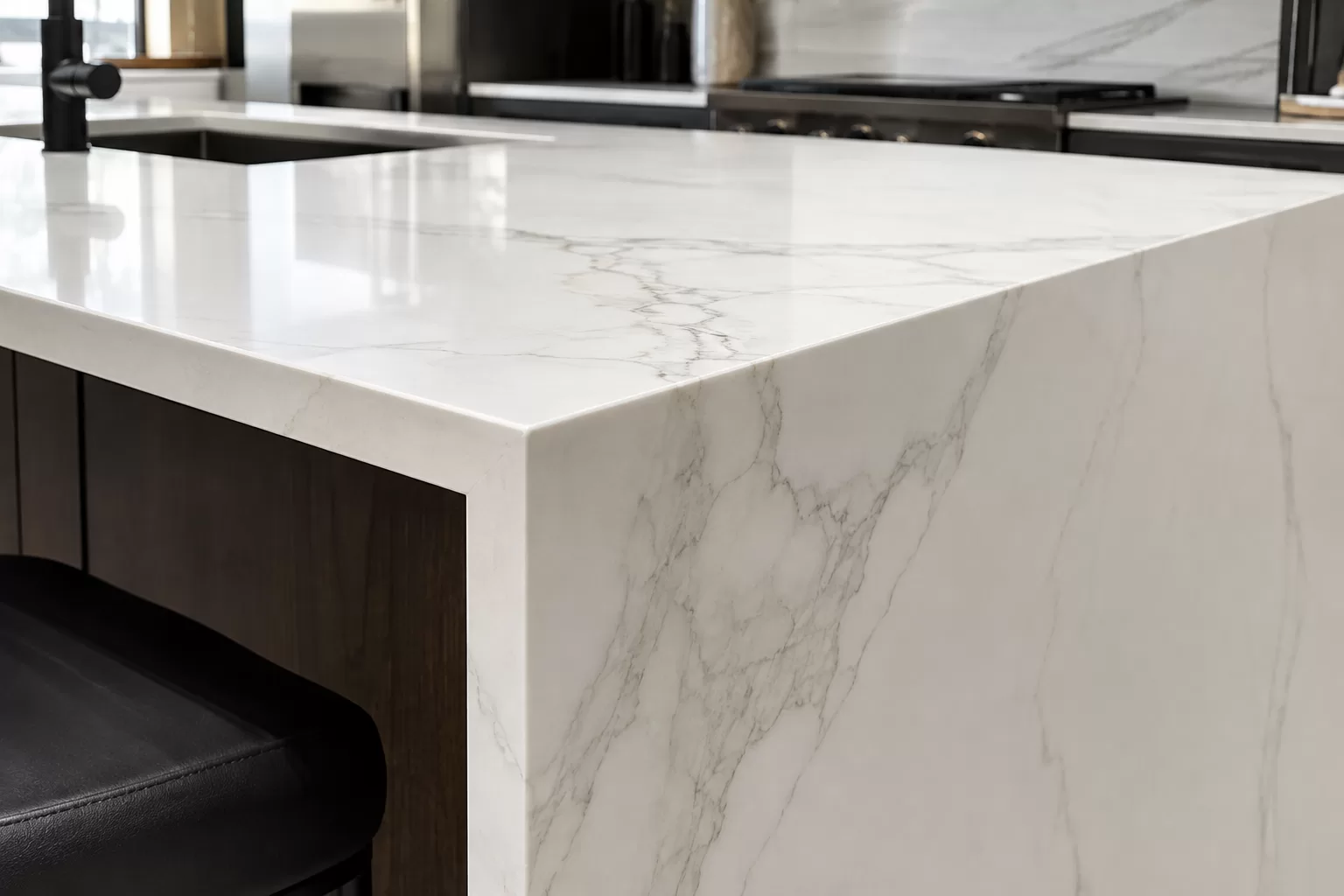
Quartz countertops are known for being durable, low-maintenance, and practical for everyday use. That does not mean they are completely resistant to heat.
For homeowners who cook often, one of the most common questions is whether a hot pan can go directly on quartz. The short answer is no. Quartz can tolerate some warmth, but direct contact with very hot cookware can damage the surface.
Understanding why that happens can help you protect your countertops without changing the way you use your kitchen.
How Heat Affects Quartz Countertops
Quartz countertops are engineered surfaces made from natural quartz combined with resins and other materials. Those resins help give quartz its consistent appearance and smooth finish, but they are also more sensitive to extreme heat than natural stone.
A warm mug, plate, or serving dish is usually not a concern. The risk comes from cookware that has just come off the stove or out of the oven.
Cast iron skillets, baking sheets, roasting pans, and Dutch ovens can hold enough heat to affect the resin in the countertop. If that happens, the damage may show up as discoloration, dull spots, changes in the finish, or, in more serious cases, cracking.
The important thing to remember is that heat damage is not always something you can simply clean away.
What Should You Put Under Hot Pans?
The easiest way to protect quartz is to use a trivet or heat-resistant pad.
This is especially important for cookware that holds heat for a long time, such as cast iron or heavy baking dishes. Even after the food is done cooking, the bottom of the pan may still be hot enough to damage the surface.
Keeping a trivet near the stove or oven makes this an easy habit. It takes almost no extra effort, and it can prevent a much bigger problem later.
What About Air Fryers, Toaster Ovens, and Other Appliances?
Heat exposure is not limited to cookware.
Countertop appliances can also create concentrated heat, especially during longer cooking cycles. Air fryers, toaster ovens, electric griddles, and slow cookers are common examples.
Each appliance is different, so it is best to follow the manufacturer’s instructions for countertop use and clearance. If the bottom of an appliance becomes very hot, a heat-safe mat can add another layer of protection.
It is also a good idea to leave enough room around appliances that release heat from the sides or back.
Can Heat Damage on Quartz Be Repaired?
Sometimes, but the answer depends on the damage.
Light discoloration may be easier to address than deeper damage to the resin or finish. If the surface has changed because of heat, aggressive scrubbing or harsh cleaners are unlikely to fix the problem and may make it worse.
Heat damage can sometimes be mistaken for a stain, even though the issue may actually be with the surface itself.
If you are unsure what caused the mark, it is better to have it evaluated before trying stronger cleaning methods.
Is Quartz Still a Good Choice for a Busy Kitchen?
Yes, Quartz is still one of the most practical countertop materials for everyday use.
It is durable, easy to clean, and available in a wide range of colors and patterns. The main requirement is simple: use the surface properly.
Good countertop habits include:
- Using trivets under hot cookware
- Using cutting boards instead of cutting directly on the surface
- Cleaning spills before they sit too long
- Avoiding harsh or abrasive cleaners
- Following the care recommendations for the specific quartz product
None of these steps are difficult, but together they can make a big difference in how the countertop looks over time.
How Does Quartz Compare With Granite for Heat Resistance?
Quartz and granite handle heat differently because they are made from different materials.
Granite is a natural stone, while quartz is an engineered surface that contains resin. That resin makes quartz more sensitive to direct heat from hot cookware.
Quartz is still a durable option for busy kitchens, but it is best to use a trivet or heat-resistant pad under hot pans. Granite can generally tolerate higher temperatures, although protecting any countertop surface from direct heat is still a good habit.
If you are choosing between quartz and granite countertops, heat resistance is just one factor to consider. Maintenance, appearance, stain resistance, and how you use your kitchen day to day should also play a role in the decision.
Protecting Quartz Is Mostly About Good Habits
Quartz is relatively easy to maintain, but protecting it from direct heat is an important part of keeping the surface in good condition.
Avoid placing very hot cookware directly on the countertop. Use a trivet or heat-resistant pad, give heat-producing appliances enough clearance, and be cautious with marks that may be caused by heat rather than a typical stain.
A few simple habits can help protect the finish and keep your quartz countertops looking their best over time.
If you are considering quartz countertops for your kitchen, RockSmith Granite & Quartz can help you compare materials, colors, and styles to find the right fit for your space.
Contact RockSmith Granite & Quartz to learn more about your countertop options.